
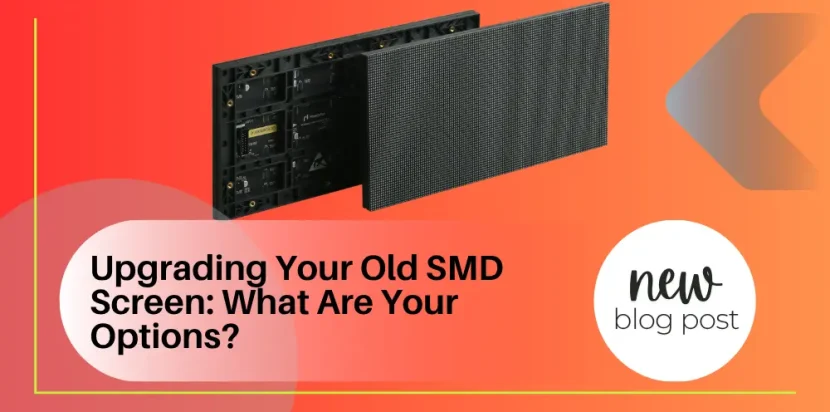
In the highly competitive world of digital signage and outdoor advertising, visual impact is everything. A brilliant, flawless display captures attention, builds brand authority, and drives revenue. However, display technology advances at a breakneck pace. What was considered state-of-the-art five years ago may now look pixelated, dim, and outdated compared to modern installations. If your current display is showing its age, experiencing frequent hardware failures, or consuming exorbitant amounts of electricity, it is time to seriously consider an SMD LED screen upgrade.
Committing to an SMD-LED screen upgrade is a strategic business decision that requires a thorough understanding of your existing hardware architecture and your future advertising goals. You do not necessarily have to tear down your entire structure and start from scratch. Depending on the condition of your mounting infrastructure and your budget, an SMD-LED screen upgrade can take several different forms, ranging from simple control system retrofits to complete module replacements.
This comprehensive guide will walk you through the technical pathways available for your SMD-LED screen upgrade. By the end of this article, you will have the expert knowledge needed to evaluate your current setup, understand the latest technological advancements, and choose the most cost-effective SMD LED screen upgrade strategy to revitalize your digital presence.
Why You Should Consider an SMD LED Screen Upgrade Today
Before exploring the “how” of an SMD-LED screen upgrade, it is critical to understand the “why.” Older generation displays, particularly those utilizing dual-inline package (DIP) technology or early surface-mount diode (SMD) technology, suffer from several inherent disadvantages compared to today’s cutting-edge components.
First and foremost is visual degradation. Over thousands of hours of operation, the phosphors inside the diodes degrade, leading to reduced brightness (measured in Nits) and significant color shifting. If your white backgrounds now look slightly yellow or pink, an SMD-LED screen upgrade is the only way to restore brand-accurate color representation. Furthermore, older screens typically have lower refresh rates (often around 960Hz to 1920Hz). When photographed or filmed by a smartphone, these screens exhibit severe banding and flickering. A modern SMD-LED screen upgrade will introduce high-refresh-rate driving ICs (3840Hz to 7680Hz), ensuring your content looks flawless both to the naked eye and through a camera lens.
Another driving factor for an SMD-LED screen upgrade is energy efficiency. Modern diodes, such as those featured in a BIA Nationstar SMD Screen, utilize common cathode technology and highly efficient power supplies that can reduce electricity consumption by up to 30%. Over the lifespan of a large commercial billboard, the energy savings generated by a timely SMD-LED screen upgrade can often offset the initial capital expenditure of the hardware itself.
Option 1: The Control System and Software SMD LED Screen Upgrade
If the physical diodes on your display are still sufficiently bright and color-accurate, but you are struggling with connectivity issues, limited formatting options, or poor software integration, a control system SMD-LED screen upgrade is your most cost-effective solution.
This type of SMD-LED screen upgrade involves replacing the older generation sending cards (the brains of the operation located in your control room) and the receiving cards (the internal components located inside each cabinet). By upgrading older Linsn or early-generation Novastar systems to the latest Taurus or Armor series synchronous/asynchronous controllers, you unlock a wealth of new capabilities.
A control system SMD LED screen upgrade allows you to manage your content via cloud-based platforms, enabling remote updates from anywhere in the world. It also improves grayscale processing, ensuring smoother gradients in your high-definition videos. Because this SMD LED screen upgrade does not involve replacing the expensive LED modules or the physical cabinets, it requires a significantly lower budget while still providing a noticeable boost in operational efficiency and content management capabilities.
Option 2: The Module-Level SMD LED Screen Upgrade (Retrofitting)
When your control system is functioning adequately, but the visual resolution of your display is no longer sufficient for your audience’s viewing distance, a module-level SMD LED screen upgrade is the logical next step. This approach allows you to retain your existing steel or aluminum framework, wiring, and power distribution systems, while vastly improving the image quality.
A module-level SMD LED screen upgrade involves removing the old LED panels (modules) from the cabinets and replacing them with newer modules featuring a tighter pixel pitch. Pixel pitch—the distance in millimeters between the centers of two adjacent pixels—dictates resolution. For example, if you have an older P10 (10mm) outdoor billboard, performing an SMD LED screen upgrade to a P6 or P5 module will exponentially increase the number of pixels on your display, resulting in a significantly sharper, higher-definition image.
This method of SMD LED screen upgrade requires precise engineering. The new modules must align perfectly with the mounting holes of your existing cabinets. When executing a module-level SMD LED screen upgrade, it is also highly recommended to upgrade the power supplies simultaneously, as older power supplies may not deliver the stable voltage required by high-density modern ICs. If you are considering this route for a retail environment, upgrading to a high-resolution BIA Indoor SMD Screen module can transform a basic digital poster into a stunning, cinematic viewing experience.
Option 3: The Complete Hardware SMD LED Screen Upgrade
Sometimes, the most economically sound decision in the long run is a complete, top-to-bottom SMD LED screen upgrade. If your current display features heavy, rusting iron cabinets, outdated wiring that poses a fire hazard, and failing modules, attempting a partial retrofit will only result in continuous maintenance headaches. A complete hardware SMD LED screen upgrade provides a fresh start with state-of-the-art technology.
A full hardware SMD LED screen upgrade allows you to transition from cumbersome traditional iron cabinets to modern, ultra-lightweight die-cast aluminum cabinets. These modern cabinets boast seamless splicing, zero-bezel alignment, and superior heat dissipation, which prolongs the life of the internal components. For outdoor applications, a complete SMD LED screen upgrade ensures you benefit from the latest IP65 or IP68 waterproofing standards, safeguarding your investment against harsh weather conditions. You can explore the robust durability of our modern structural designs by reviewing the specifications of the BIA Outdoor SMD Screen.
Furthermore, a full SMD LED screen upgrade opens the door to entirely new architectural possibilities. Instead of replacing a flat screen with another flat screen, you might choose an SMD LED screen upgrade that incorporates creative shapes. Utilizing a BIA Flexible SMD Screen allows you to wrap digital content around columns or create sweeping curved walls. Alternatively, opting for a BIA Ultra Thin SMD Screen during your SMD LED screen upgrade provides a sleek, low-profile aesthetic ideal for high-end corporate lobbies and luxury retail stores.
Calculating the ROI of Your SMD LED Screen Upgrade
Securing the budget for an SMD LED screen upgrade requires demonstrating a clear Return on Investment (ROI) to your stakeholders. Fortunately, the financial arguments for an SMD LED screen upgrade are compelling and multi-faceted.
The most immediate financial benefit of an SMD LED screen upgrade comes from reduced energy expenditure. Modern displays operate far more efficiently than older models. By significantly dropping your kilowatt-per-hour consumption, the SMD LED screen upgrade begins paying for itself the moment you power it on. Secondly, a comprehensive SMD LED screen upgrade drastically reduces your ongoing maintenance and repair costs. Older screens require constant troubleshooting, module replacements, and technician call-outs. A new system comes with comprehensive warranties and vastly improved reliability.
Finally, the revenue-generating potential of an SMD LED screen upgrade cannot be overstated. For advertising networks, a brighter, higher-resolution display commands higher premium ad rates. Advertisers want their content displayed on the best possible canvas. By executing an SMD LED screen upgrade, you make your advertising space more attractive, increasing your occupancy rates and boosting your bottom line.
Planning Your SMD LED Screen Upgrade with BIA
Embarking on an SMD LED screen upgrade is a complex technical project that requires careful planning, structural assessment, and flawless execution. It is not merely a matter of buying new screens; it is about engineering a custom solution that fits your specific environmental constraints and business objectives.
When you partner with BIA SMD Screens for your SMD LED screen upgrade, you gain access to world-class engineering expertise. Our team will conduct a thorough on-site audit of your existing infrastructure to determine whether a control system retrofit, a module replacement, or a full hardware SMD LED screen upgrade is the most viable path forward. We prioritize E-E-A-T principles (Expertise, Experience, Authoritativeness, and Trustworthiness) in every consultation, ensuring that the SMD LED screen upgrade strategy we recommend is grounded in technical reality and aligned with your long-term commercial goals.
Don’t let aging technology hold your business back. Embrace the future of digital signage by planning your SMD LED screen upgrade today. Browse our extensive catalog of high-performance components and full-cabinet solutions on our Products Page to discover the incredible technological advancements waiting for you.
Frequently Asked Questions (FAQs)
1. How do I know if I need a full SMD LED screen upgrade or just a repair? If your screen requires constant repairs, if replacement parts for your specific generation are no longer manufactured, or if the overall brightness has degraded by more than 40%, an SMD LED screen upgrade is far more cost-effective in the long term than continuing to fund endless emergency repairs.
2. Can I do a module-level SMD LED screen upgrade on a very old DIP billboard? Typically, no. Older DIP (Dual In-line Package) cabinets have completely different mounting structures, power distribution setups, and ventilation requirements than modern surface-mount diode modules. If you are moving from DIP to modern technology, a full hardware SMD LED screen upgrade is almost always required.
3. Will an SMD LED screen upgrade lower my electricity bill? Yes, absolutely. One of the major benefits of a modern SMD LED screen upgrade is the integration of energy-saving ICs, common cathode power technology, and high-efficiency power supplies. A modern display can consume 20% to 30% less power than a comparable screen manufactured five to seven years ago.
4. How long does a complete SMD LED screen upgrade take to install? The timeline for an SMD LED screen upgrade depends on the size and complexity of the project. A software and control system upgrade can be completed in a single day. A module retrofit might take a few days, while a complete structural tear-down and hardware SMD LED screen upgrade for a massive outdoor billboard could take one to two weeks of on-site labor.
5. Does BIA provide warranties on an SMD LED screen upgrade? Yes. When you choose BIA for your SMD LED screen upgrade, all new hardware, including Nationstar diodes, control systems, and power supplies, comes with comprehensive commercial warranties. This guarantees peace of mind and ensures your SMD LED screen upgrade remains a reliable asset for years to come.
Are you ready to transform your visual advertising? Stop settling for subpar resolution and high maintenance costs. A professional SMD LED screen upgrade is the definitive way to future-proof your digital real estate. Whether you need a smart control system integration or a complete architectural overhaul, our dedicated engineering team is here to guide you every step of the way. Reach out to us immediately through our Contact Page
for a customized project consultation. You can also join the conversation and see our recent high-profile installations by following our Facebook Page. Elevate your brand with BIA today!
Comments are closed